Acid-Stage Protein Processing with Pepsin: Pilot Plan and Supplier Checks
For collagen, gelatin and protein-ingredient processors planning an acid-stage step with pepsin: process fit, pilot design, stop step, lot QC and quotes.
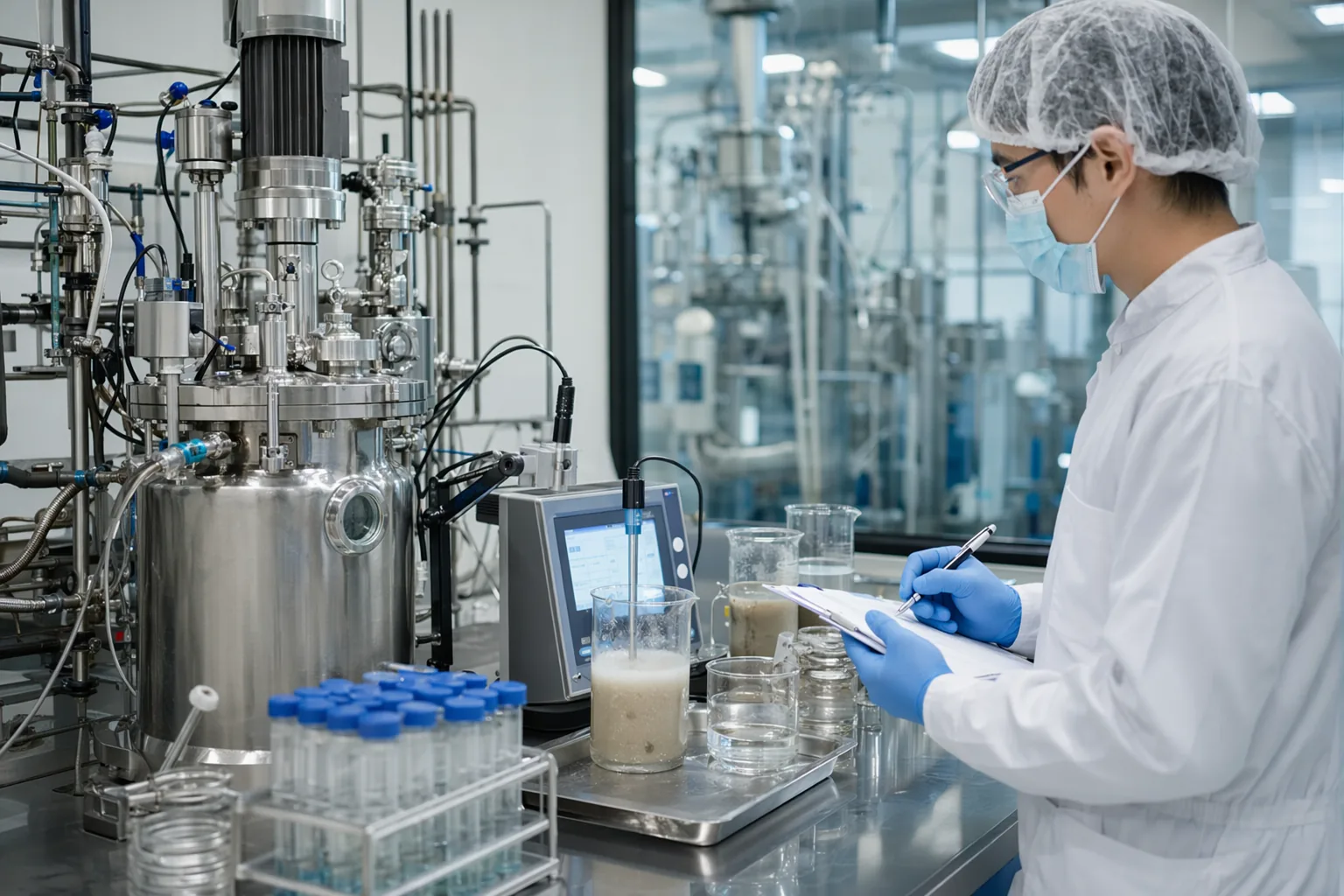
Collagen, gelatin and protein-ingredient processors add an acid-stage enzyme step when the raw material is already acidified or when they need peptides that a neutral protease does not give. The business question is whether the step pays: yield, throughput and a stable product against the cost of enzyme, acid, alkali and reactor time. This guide covers process fit, the pilot plan, QC and what to send for a quote.
Our pepsin is specified at 1:10,000 – 1:15,000 NF, from porcine gastric mucosa, in 1 kg, 5 kg and 25 kg packs from a 1 kg minimum.
When an Acid-Stage Step Makes Sense
Pepsin cleaves peptide bonds under acidic conditions, so it fits processes where low pH is already part of the operation: acid-conditioned collagen and hides, gelatin streams, fish and meat proteins, and specialty protein fractions. If the process runs near neutral, a neutral protease is usually the more practical choice, because acidifying and then neutralizing a stream adds cost.
Use pepsin where the stream is acidic anyway. • Count acid and alkali in the cost. • Compare with a neutral protease on the same raw material.
Substrate Fit and Targets
The substrate is the accessible protein in your raw material, not a protein name. Collagen, gelatin, casein, whey, meat and fish proteins each need different pretreatment and endpoint control; for collagen extraction, acid conditioning or size reduction may improve enzyme access, while too much hydrolysis lowers the molecular-weight characteristics buyers of the ingredient pay for. Define the target before the trial: extraction yield, peptide size, solubility, viscosity or flavor.
Set the endpoint first. • Control fat, ash, salt and pretreatment of the raw material. • Pilot with production raw material, not lab-grade protein.
Pilot Design
Our grade's optimum is pH 1.5–3.5 at 37°C–42°C; the working point inside that window is set by your substrate, equipment and downstream steps. Change one variable at a time, dose on an activity basis rather than by powder weight, and take samples at fixed times to build a hydrolysis curve. Record enzyme lot, addition point, solids, agitation, acid type and the stop step for every run.
Measure pH at process temperature. • Dose by activity and set it by trial. • Build a time curve before fixing the endpoint.
Stop Step and QC
Most apparent enzyme problems are pH control or raw-material problems. Track pH, temperature, solids and time during the run, and endpoint tests such as degree of hydrolysis, soluble nitrogen, peptide profile, viscosity or filtration rate. Stop the reaction with a validated pH shift or heat step and confirm it by residual-activity testing when storage stability matters. Check each enzyme lot against its COA and keep retain samples.
Verify the stop step. • Tie endpoint tests to product function. • Link enzyme lot data to batch results.
Technical Buying Checklist
Raw material and its pretreatment. • Endpoint and the test for it. • Planned pH, temperature and stop step. • Cost items: enzyme, acid and alkali, energy, reactor time. • Source acceptability of porcine pepsin for your market. • Quantity per year and pack size: 1 kg, 5 kg or 25 kg.
How to Request a Quote
Request a quote by email or through the form on the home page. Send the product and grade, the quantity per order or per year, the destination country and your application. Packs are 1 kg, 5 kg and 25 kg, the minimum order is 1 kg, and we reply within 24 hours.
Pepsin for Research & Industry
Need Pepsin for your lab or production process?
ISO 9001 certified · Food-grade & research-grade · Ships to 80+ countries
Frequently Asked Questions
When should a processor choose pepsin over a neutral protease?
When the stream is acidic already, or when the peptide profile you need comes from acid-side cleavage. If you would have to acidify and then neutralize only for the enzyme, compare the total cost with a neutral protease on the same raw material.
What pH and temperature does your grade work at?
Our grade's optimum is pH 1.5–3.5 at 37°C–42°C. The working point inside that window is set by your pilot.
Why did the reaction stall?
Common causes are pH drifting out of the acid window, enzyme added before the reactor reached temperature, poor wetting of the raw material, raw-material variation, weak mixing or a dose not set on an activity basis. Check these against your pilot baseline before changing supplier.
What documents come with the enzyme?
Our batches come with COA and TDS for qualified buyers. Ask any supplier for the activity method and a porcine source declaration as well.
Related: Pepsin Enzyme Substrate & Function
Contact EnzymePoint to discuss pepsin specifications, pilot samples, and cost-in-use evaluation for your protein hydrolysis process. See our application page for Pepsin Enzyme Substrate & Function for specs, MOQ, and a free 50 g sample.
Contact Us to Contributehello@mail.enzymepoint.com