Pepsin, Protease, Amylase and Lipase Blends: Specification Guide for Formulators
For supplement brands, contract manufacturers and blenders specifying pepsin in protease, amylase and lipase blends: activity per component, stability, documents and quotes.
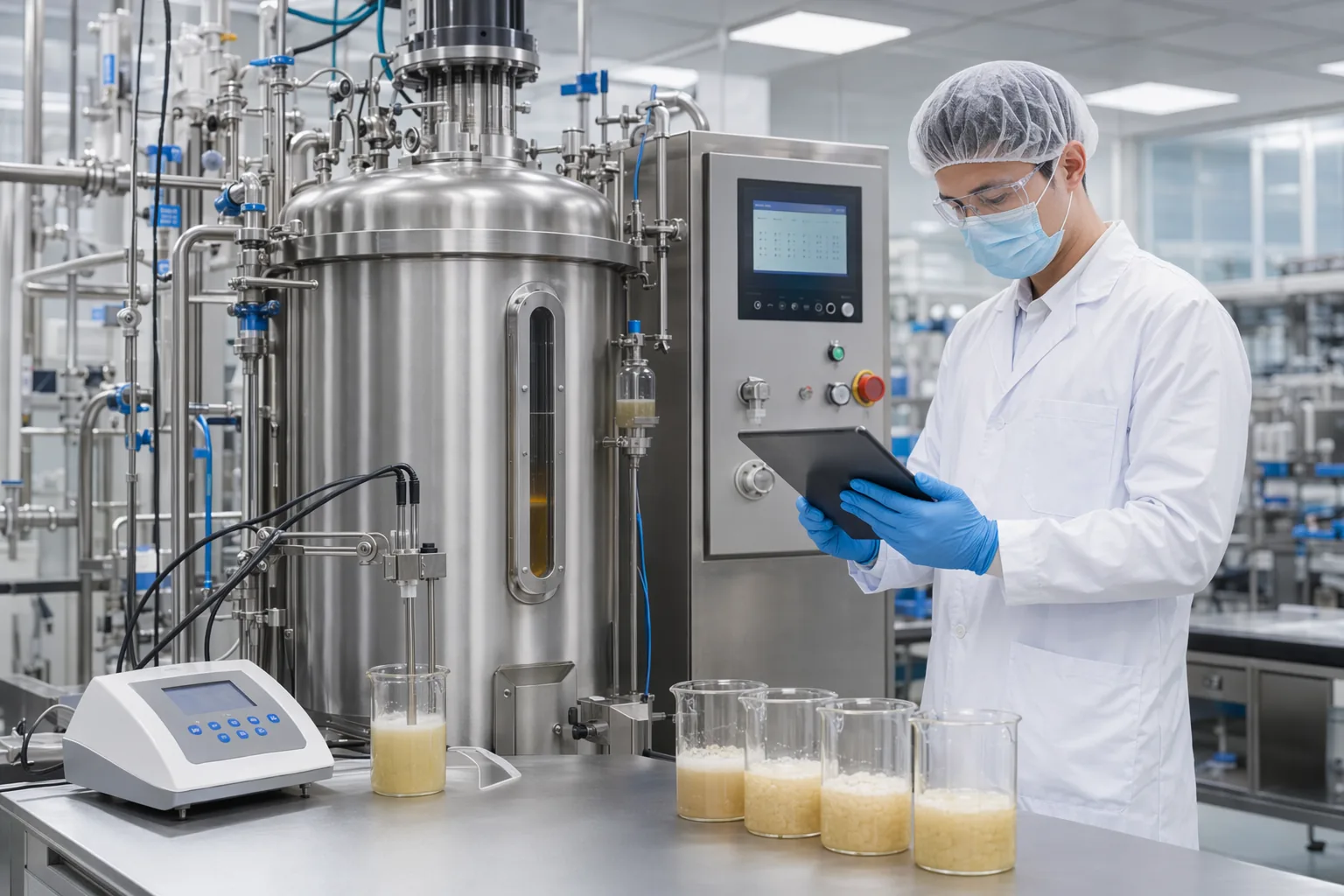
Supplement brands, contract manufacturers and enzyme blenders who put pepsin into a multi-enzyme capsule, tablet or powder face the same problem: four enzymes, four activity claims, and one finished format that has to hold every claim until the end of shelf life. This guide covers how to specify the pepsin component, what to check, and what to send for a quote.
Our pepsin is specified at 1:10,000 – 1:15,000 NF, from porcine gastric mucosa, in 1 kg, 5 kg and 25 kg packs from a 1 kg minimum.
Pepsin's Role in a Blend
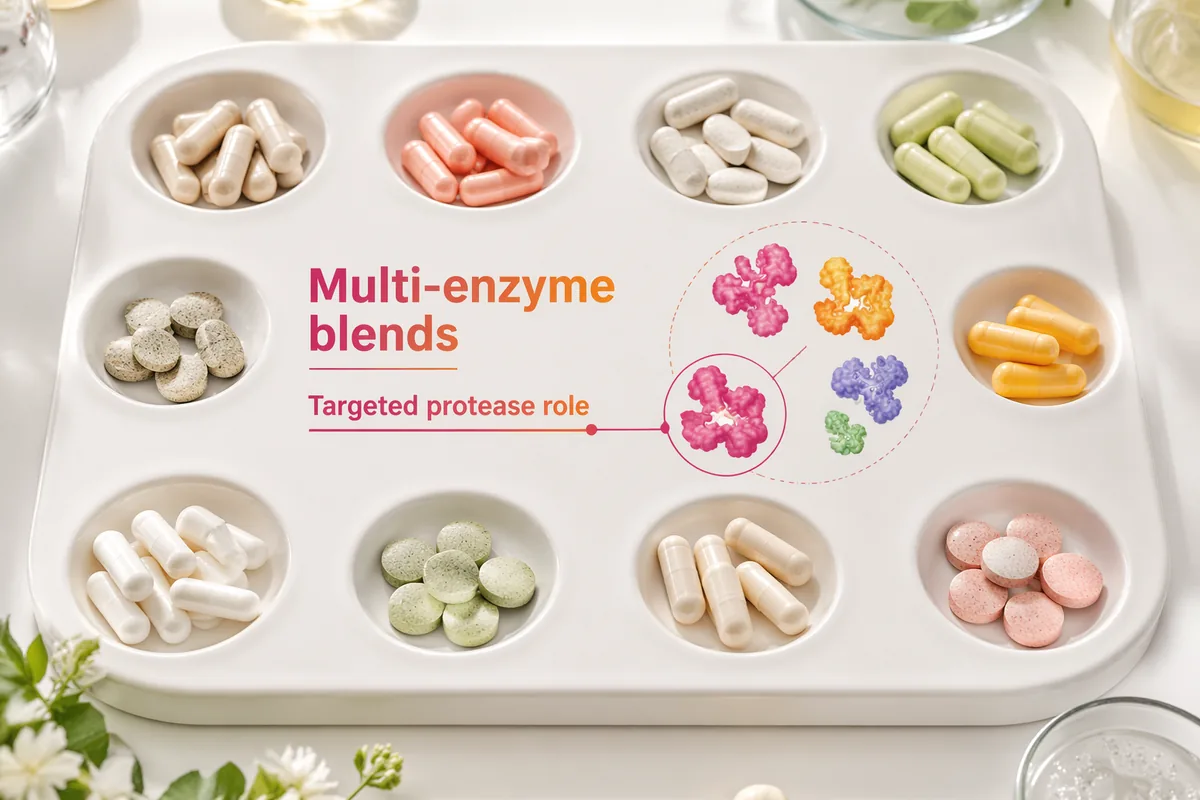
Pepsin is an acidic endopeptidase: it acts on the protein fraction of a formula and on nothing else. It does not break down starch, which is the role of amylase, or fat, which is the role of lipase, and it is not interchangeable with neutral bacterial or fungal proteases, which work at a different pH. In a blend it is specified for one job, and the label claim for it should be stated on its own.
Specify pepsin for the protein fraction only. • Do not count pepsin activity toward the amylase or lipase claim. • Keep the protease components separate in the specification.
Each Enzyme Needs Its Own Activity Claim
The enzymes in a pepsin, protease, amylase and lipase blend do not share one ideal operating window. Pepsin's activity sits at acidic pH (our grade's optimum is pH 1.5–3.5), while many amylase and lipase grades are specified closer to neutral, depending on source. A blend specification therefore needs a separate activity figure for each component, each measured by its own assay, rather than one total enzyme figure.
Ask for the activity method of every component. • State each activity claim per serving or per gram of blend on your own specification. • Avoid assuming equal activity in one solution.
Compatibility and Stability in the Finished Format
Most blend failures appear in storage, not at mixing. Moisture pick-up, heat during tableting and contact between enzyme powders and other actives can lower one component faster than the others, so the blend misses one claim while the others still pass. Our pepsin is supplied as a white to pale yellow powder with a shelf life of 24 months when sealed and refrigerated; the finished blend needs its own stability data under your packaging and storage conditions.
Run stability on the finished format, not only on the raw enzymes. • Check moisture and storage temperature through the supply chain. • Re-test every component claim at the end of the planned shelf life.
Documents and Source Declarations
A blend label rests on the documents behind each ingredient. For the pepsin component, ask for the lot COA, the TDS, the activity method and a source declaration, because porcine origin affects labeling and customer acceptance in several markets. HALAL-certified batches available with COA and TDS for qualified buyers.
Review COA and TDS before the first trial. • Confirm the porcine source declaration against your label and markets. • Keep lot traceability from enzyme to finished batch.
Technical Buying Checklist
Finished format (capsule, tablet or powder) and serving size. • Activity claim per component and the assay for each. • Stability plan for the finished blend. • Source and labeling requirements for porcine pepsin in your markets. • Grade wanted (NF/USP or EP). • Quantity per year and pack size: 1 kg, 5 kg or 25 kg.
How to Request a Quote
Request a quote by email or through the form on the home page. Send the product and grade, the quantity per order or per year, the destination country and your application. Packs are 1 kg, 5 kg and 25 kg, the minimum order is 1 kg, and we reply within 24 hours. Contract manufacturers and resellers are quoted the same way.
Pepsin for Research & Industry
Need Pepsin for your lab or production process?
ISO 9001 certified · Food-grade & research-grade · Ships to 80+ countries
Frequently Asked Questions
Can pepsin be combined with protease, amylase and lipase in one formula?
Yes, but each enzyme has its own pH and stability profile, so the blend should be specified component by component, with a separate activity claim and assay for each, and confirmed by stability testing of the finished format.
What does pepsin act on in a mixed formula?
Only the protein fraction. Pepsin does not act on starch (the role of amylase) or fat (the role of lipase), so its activity claim should never be added to theirs.
Which documents should a formulator ask for?
The lot COA, the TDS, the activity method and a porcine source declaration for the pepsin component, plus the matching documents for every other enzyme in the blend.
What pack sizes and minimum order do you supply?
Pepsin is supplied in 1 kg, 5 kg and 25 kg packs. The minimum order is 1 kg, which suits pilot blends and stability batches before a production order.
Related: Pepsin Enzyme Substrate & Function
Contact EnzymePoint to discuss pepsin samples, documentation, and pilot validation for your protein hydrolysis process. See our application page for Pepsin Enzyme Substrate & Function for specs, MOQ, and a free 50 g sample.
Contact Us to Contributehello@mail.enzymepoint.com